 Government Medical College (GMC), Paderu: A Comprehensive Overview
Serene Setting: Paderu Hill Station & The Eastern Ghats
Government Medical College, Paderu is located at Talarisingi village in the high-altitude Agency tracts of Alluri Sitharama Raju (ASR) district, Andhra Pradesh. Perched at an elevation exceeding 900 meters(2950 feet) above sea level within the undulating ridges of the Eastern Ghats. Paderu is celebrated for its pleasant, misty climate, dense forest canopies, terraced coffee plantations, and rich biodiversity. The institution offers an idyllic, tranquil academic atmosphere far removed from urban congestion, providing a campus environment defined by scenic valley views and clean mountain air.

Origin & Conceptual Idea
For decades, the Agency belt of the undivided Visakhapatnam district (now ASR district) faced severe geographic and infrastructural barriers to modern tertiary healthcare. Indigenous tribal populations had to navigate difficult ghat roads and travel over 100 kilometers to King George Hospital (KGH) in Visakhapatnam for basic emergency care, specialist consultations, and surgical procedures. GMC Paderu was conceived to:
- Bridge the severe urban-rural healthcare divide in remote tribal agency areas.
- Create a dedicated regional healthcare and academic hub for tribal empowerment.
- Address endemic tribal health challenges—such as sickle cell anemia, seasonal fevers, maternal morbidity, and infant morbidity—by training doctors embedded directly in these communities.
Establishment & Central Government Initiative
The establishment of GMC Paderu was realized under the Centrally Sponsored Scheme (CSS) for the "Establishment of new medical colleges attached with existing district/referral hospitals" (under the broader framework of PMSSY and allied central-state healthcare funding models).
- State & Central Synergy: The institution was developed with combined funding and sanctioning from both the Central Government and the Government of Andhra Pradesh to systematically establish medical colleges across unserved backward and tribal districts.
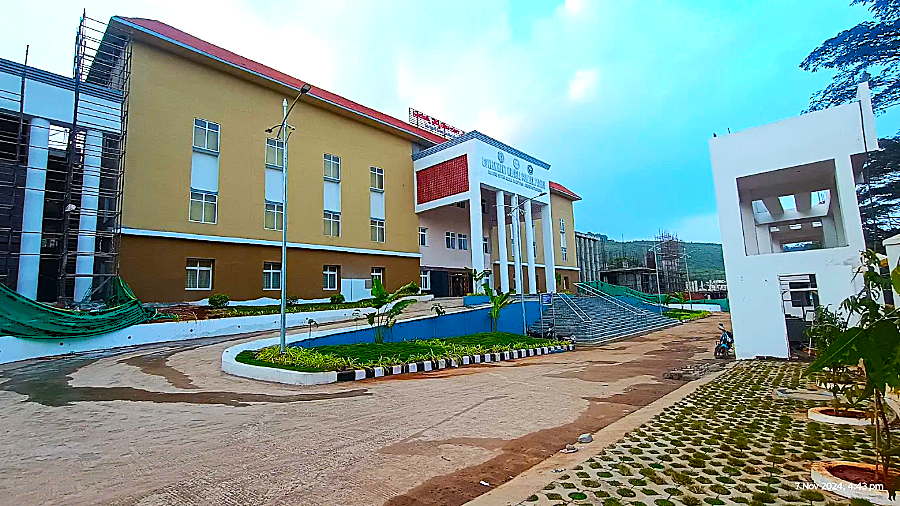
- Campus Infrastructure: Built across a sprawling 35-acre site at Talarisingi, the campus encompasses academic blocks, modern laboratories, lecture theaters, central library facilities, student hostels, and residential faculty quarters.
- Academic Affiliation: Affiliated with Dr. NTR University of Health Sciences and regulated under the National Medical Commission (NMC).
Hospital Infrastructure: Present Operations & Ongoing Expansion
To balance immediate clinical services with long-term capacity, the hospital infrastructure operates across dedicated facilities while massive construction is underway:
- Current Operations at Varthanapalle: Clinical operations are temporarily functioning from the new building constructed at Varthanapalle, Paderu, serving as the operational hospital setup for outpatient care, routine admissions, diagnostics, and essential specialty services.
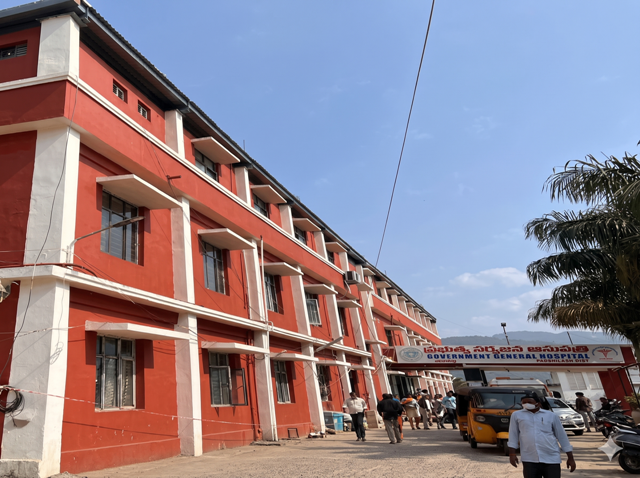
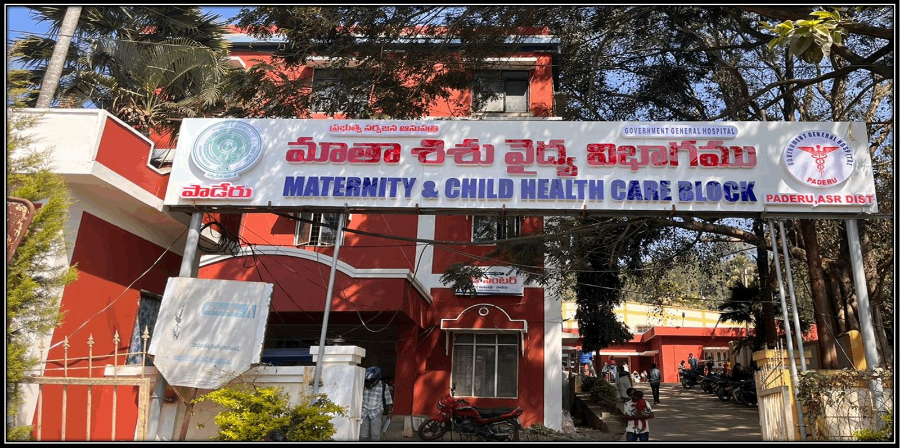
- Dedicated Mother and Child Hospital (MCH): A separate, dedicated Mother and Child Hospital is fully functional to cater specifically to Obstetrics & Gynecology and Pediatrics admissions, ensuring focused maternal care, institutional deliveries, and specialized neonatal/child health management.
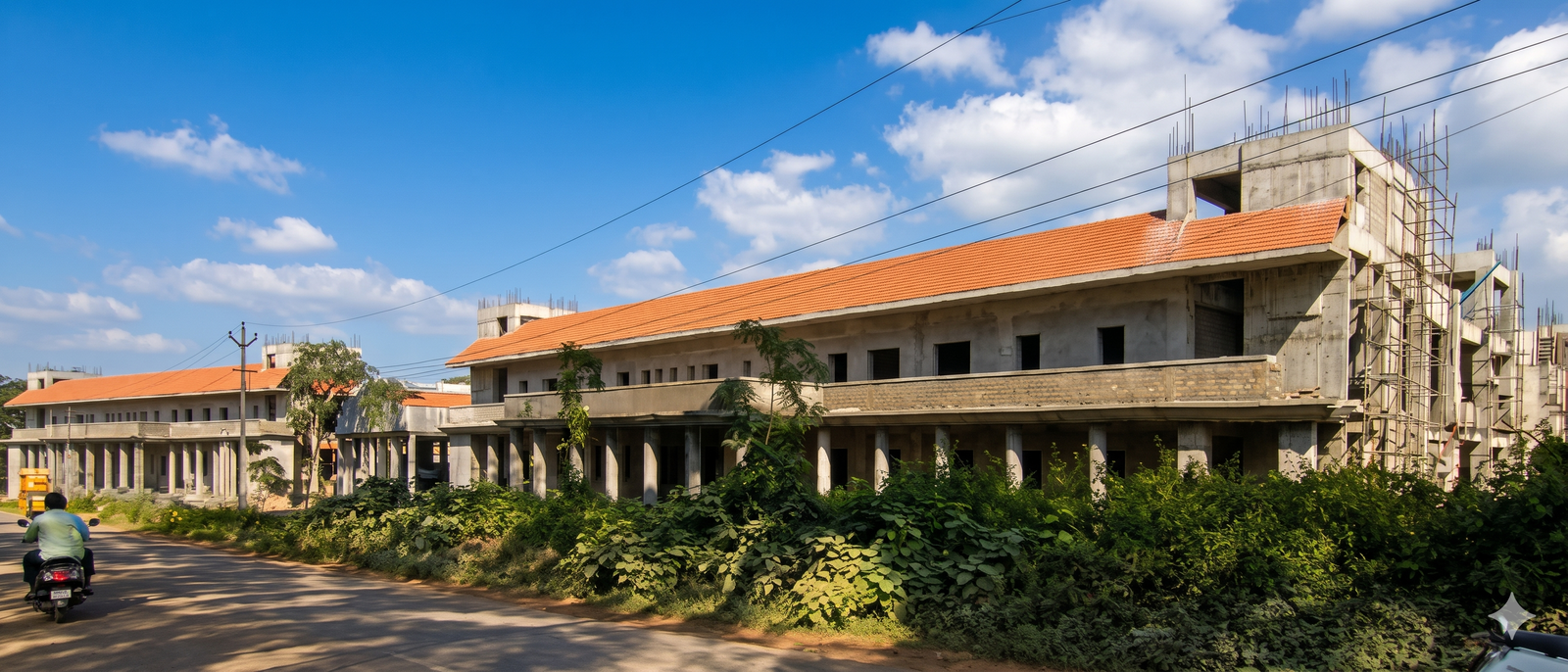
- Upcoming State-of-the-Art Hospital Block: A full-fledged new hospital complex featuring state-of-the-art facilities, advanced critical care units (ICUs), modern modular operation theaters, and high-end imaging suites is actively under construction, slated for targeted completion within coming 18 months. Once completed, this multi-specialty block will serve as the permanent, comprehensive teaching hospital on campus.
Significance for the Tribal Belt
The attached Government General Hospital (GGH) serves as a critical lifeline for indigenous communities:
- Life-Saving Proximity: Tribal hamlets across Paderu, Araku Valley, Chintapalli, G. Madugula, Hukumpeta, and neighboring agency mandals now have localized access to institutional deliveries, pediatric intensive care, emergency surgery, dialysis, and trauma stabilization without undergoing arduous journeys down the ghats.
- High Clinical Exposure: Handling robust outpatient loads and a wide spectrum of infectious, tropical, and genetic disorders (including hemoglobinopathies), GGH provides medical students with deep exposure to primary healthcare challenges, epidemiology, and community medicine in tribal contexts.
MBBS Seat Trajectory (50 to 100 Seats & Expansion to 150) and Postgraduate Seats
The medical college was initially designed and structurally planned for a full intake capacity of 150 MBBS seats:
- Initial Sanction (Academic Year 2024–25): The college received its Letter of Permission (LoP) from the National Medical Commission (NMC) to admit its inaugural batch with 50 MBBS seats.
- Intake Enhancement (2026 Admissions): Following subsequent reviews of faculty recruitment, infrastructure development, and clinical capacity, the seat intake was enhanced from 50 to 100 seats for the 2026 admissions cycle.
- Final Target: With the targeted handover of the new state-of-the-art hospital building within coming 18 months and the operationalization of additional specialty wards, the institution will scale to its full sanction of 150 MBBS seats alongside simultaneous postgraduate (MD/MS) residency programs.
- Postgraduate (MD/MS) Expansion: 24 Seats Across 6 Departments: In a major academic milestone, GMC Paderu received the Letter of Permission (LoP) from the National Medical Commission (dated November 5, 2026) to commence 24 Postgraduate (MD/MS) seats across 6 broad specialty clinical departments starting with the NEET PG 2026 counselling cycle:
-
Department / Program Total Sanctioned Seats All India Quota (AIQ) Seats State Quota Seats M.D. General Medicine 4 2 2 M.D. Paediatrics 4 2 2 M.D. Anaesthesiology 4 2 2 M.S. General Surgery 4 2 2 M.S. Obstetrics and Gynaecology 4 2 2 M.S. Orthopaedics 4 2 2 Total 24 12 12
The induction of postgraduate resident doctors across these six core clinical specialties directly strengthens round-the-clock emergency care, specialist clinical services, surgical output, and teaching capacity at GGH Paderu.
Ancillary & Allied Healthcare Programs (Starting Soon)
To build a self-sustaining healthcare ecosystem in the Agency area and empower local tribal youth with direct professional employment, the institution is expanding beyond undergraduate medical education:
- College of Nursing: Programs including B.Sc Nursing and GNM (General Nursing & Midwifery) will be starting soon, creating a skilled frontline nursing cadre trained directly within tribal tertiary hospital settings.
- Medical Laboratory Technology (MLT): Courses in DMLT / B.Sc MLT are slated to launch shortly to train skilled laboratory technicians, strengthening local diagnostic infrastructure for clinical pathology, microbiology, hematology, and biochemistry.
- Allied Paramedical Courses: Additional paramedical diploma and degree courses—such as Emergency Medical Technology, Operation Theatre Technology (OTT), Radiography & Imaging Technology, and Anesthesia Technology—are in the pipeline to supply well-trained technical staff for the upcoming state-of-the-art hospital block and primary health centers across the Eastern Ghats belt.